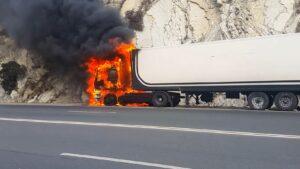


Interstate 85 and Interstate 485 carry an enormous share of the freight moving through the Charlotte region every day. I-85 threads directly through the city as a major north-south trucking corridor between Atlanta and the Northeast, while I-485 loops around Charlotte as an outer-belt that connects distribution hubs, industrial parks, and interstate exchanges on the city’s edges. Where that much commercial truck traffic meets everyday commuters, serious crashes are almost guaranteed to follow.
Understanding why these crashes happen matters just as much as knowing where they happen. If you or a loved one has been hurt in a semi-truck accident on I-85 or I-485, the cause of the crash often determines who can be held liable — and how much your claim may be worth.
Why I-85 and I-485 See So Many Truck Accidents
Both interstates share a few characteristics that make them especially dangerous for truck-involved collisions:
- High freight volume. Charlotte sits at a major logistics crossroads, and I-85 is one of the busiest freight corridors on the East Coast. More trucks on the road statistically means more opportunities for a crash.
- Congestion and stop-and-go traffic. Rush-hour backups on both interstates force loaded tractor-trailers — vehicles that can weigh up to 80,000 pounds — to repeatedly slow and stop in traffic they were never designed to navigate safely.
- Frequent merging and weaving. I-485’s interchanges with I-85, I-77, and major arterial roads create constant lane changes, and merge zones are where many truck-versus-car collisions originate.
- Construction and lane shifts. Ongoing roadwork on sections of both interstates narrows lanes and reduces reaction time for drivers of all vehicle types, but the consequences are magnified for large trucks with long stopping distances.

Speak with a Charlotte car accident lawyer and get a free consultation today.
Call (980) 246-2656Driver-Related Causes
Human error remains the leading factor in the overwhelming majority of large truck crashes nationwide, and I-85 and I-485 are no exception.
Driver fatigue. Federal Hours-of-Service regulations limit how long a commercial driver can be behind the wheel without rest, but the pressure to meet delivery deadlines pushes some drivers — and some trucking companies — to cut corners. A fatigued driver reacts more slowly to sudden braking, weaving vehicles, or a lane closure ahead.
Distracted driving. Cell phones, dispatch tablets, GPS units, and in-cab technology all compete for a driver’s attention. At highway speeds, even a two- or three-second distraction can be the difference between a near-miss and a catastrophic rear-end collision.
Speeding and following too closely. Semi-trucks require significantly more distance to stop than passenger vehicles. A truck traveling at highway speed on I-85 that follows too closely, or that fails to slow adequately for the traffic ahead, may be unable to stop in time — resulting in devastating underride or override collisions.
Improper lane changes and blind spots. Tractor-trailers have substantial blind spots along both sides and directly behind the trailer. Merge zones on I-485, where multiple lanes of traffic converge quickly, are a common site for sideswipe and lane-change crashes when a truck driver fails to check mirrors or use a spotter.
Driving under the influence or while impaired. Though regulated more strictly than passenger drivers, some commercial drivers still operate while impaired by alcohol, illegal drugs, or even over-the-counter and prescription medications that affect alertness.
Mechanical and Cargo-Related Causes
Not every truck accident traces back to driver behavior. Some of the most serious I-85 and I-485 crashes result from:
- Brake failure or worn tires, particularly on downhill grades or during sudden braking situations in congested traffic
- Improperly secured or overloaded cargo, which can shift during a lane change or sudden stop and cause a rollover
- Tire blowouts, which can send a fully loaded trailer into adjacent lanes without warning
- Jackknife accidents, where the trailer swings out from the cab, often triggered by sudden braking, wet roads, or driver overcorrection
When mechanical failure is involved, liability frequently extends beyond the driver to the trucking company responsible for maintenance, or to a third-party maintenance contractor or parts manufacturer.

Company-Level Causes
Some of the most dangerous conditions on I-85 and I-485 are created before the truck ever leaves the lot. Trucking companies that pressure drivers to exceed Hours-of-Service limits, that skip required vehicle inspections, or that hire drivers without properly vetting their driving records can bear direct responsibility for a resulting crash — separate and apart from the driver’s own negligence.
What This Means for Your Claim
Identifying the actual cause of a semi-truck accident on I-85 or I-485 is not just an academic exercise. It shapes:
- Who can be held liable — the driver, the trucking company, a maintenance provider, a cargo loader, or a parts manufacturer
- What evidence needs to be preserved quickly — including electronic logging device data, dashcam footage, maintenance records, and driver qualification files
- What compensation may be available — including whether punitive damages could apply in cases involving reckless or willful misconduct
Because trucking companies and their insurers often move fast to investigate and protect themselves after a crash, victims benefit from having an attorney who can move just as quickly to secure evidence before it disappears.
Time of Day and Seasonal Factors
Certain conditions make crashes on these corridors more likely at specific times:
- Rush hour (6-9 a.m. and 4-7 p.m.) brings the heaviest mix of commuter and freight traffic, and the stop-and-go conditions that make rear-end truck collisions especially likely.
- Overnight hours carry a different risk: lower traffic volume but a higher concentration of fatigued drivers pushing to finish a route or meet a delivery window.
- Wet weather significantly increases stopping distances for loaded trailers and raises the risk of jackknifing, particularly on I-485’s curved interchange ramps.
- Holiday and peak shipping seasons, when freight volume spikes and delivery deadlines tighten, tend to see an uptick in fatigue- and scheduling-related crashes.
The Role of Federal Regulations in Preventing — and Proving — These Crashes
The Federal Motor Carrier Safety Administration (FMCSA) sets strict rules governing commercial drivers and the companies that employ them, including Hours-of-Service limits, vehicle inspection requirements, and driver qualification standards. When a crash on I-85 or I-485 involves a violation of these regulations — a driver who exceeded legal driving hours, a truck that skipped a required inspection, a company that failed to properly vet a driver’s record — that violation can serve as powerful evidence of negligence. In North Carolina, proving a regulatory violation contributed to a crash can strengthen a victim’s claim considerably, and in some cases support an argument for punitive damages.
Frequently Asked Questions
Is I-485 more dangerous for trucks than I-85? Both corridors present serious risks, but for different reasons. I-85 sees higher sustained freight volume as a direct through-route, while I-485’s interchange-heavy design creates more merging and weaving hazards, particularly where it meets I-85, I-77, and Independence Boulevard.
Who investigates a truck accident on these interstates? Local and state police typically respond to the scene and prepare an initial accident report. However, a full investigation into the cause — including electronic data, maintenance records, and regulatory compliance — usually requires a private investigation led by an attorney, since law enforcement reports rarely capture this level of detail.
How long do I have to file a claim after a truck accident in North Carolina? North Carolina’s statute of limitations generally gives accident victims three years from the date of the crash to file a personal injury lawsuit. However, evidence like electronic logging device data can disappear much sooner, so it’s important to act quickly even though the legal filing deadline is further out.
Injured in a Semi-Truck Accident on I-85 or I-485?
If you or someone you love has been hurt in a commercial truck accident on one of Charlotte’s interstates, the cause of the crash and the parties behind it may not be obvious right away. Shane Smith Law has helped thousands of North Carolina clients pursue fair compensation after serious truck accidents. Contact our team today for a free, no-obligation consultation to discuss what happened and what your legal options may be.