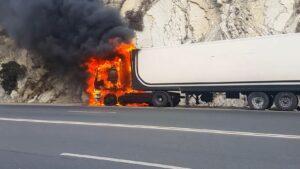


Everyone points at everyone. A multi-vehicle pileup produces competing stories from a dozen drivers, yet North Carolina law relieves you of sorting them out.
Below, we explain why one defendant can owe the whole judgment, and what still ends a claim entirely.
Why a Multi-Vehicle Pileup Often Starts With a Truck
Stopping distance explains most of it. A loaded tractor-trailer needs far more room than a car. Stopped traffic ahead therefore becomes a collision rather than a close call.
Mass finishes the job. A truck pushes vehicles into each other, converting a two-car crash into a ten-car scene.
Jackknifing adds a second hazard. Our page on jackknife accidents explains how a folded trailer blocks several lanes at once.

Speak with a Charlotte car accident lawyer and get a free consultation today.
Call (980) 294-4931Why One Defendant Can Owe the Whole Judgment
Here North Carolina helps you considerably. The state keeps joint and several liability, so any one liable defendant can owe the entire verdict.
Chapter 1B handles the rest. Defendants who pay more than a pro rata share may seek contribution from the others.
I would recommend you to my friends and family because you all handled my case very well without me having to worry about a thing. I have a very strong feeling that I could not have picked a better firm. — Ronnie
One phrase deserves attention. Under § 1B-2, when defendants divide that liability among themselves, “their relative degree of fault shall not be considered.”
So the finger-pointing becomes their problem. Consequently, you need not prove which truck or car contributed what percentage.
Why You Need Not Sue Everyone
Section 1B-1(a) settles this. Contribution rights exist “even though judgment has not been recovered against all or any of them.”
Recovery follows the same logic. Under § 1B-3(e), winning a judgment against one defendant does not discharge the others, though satisfying it does.
That freedom matters in a pileup. Therefore a solvent, well-insured carrier can answer for the whole loss.

What Settling With One Driver Does
Careful drafting matters here. A good-faith release of one defendant does not discharge the others unless the document says so.
“I think this firm is great. Thank you for everything. Ms. Shirley was really nice. She treated me like family.” — Artmisha
The credit rule contains a trap. Section 1B-4 reduces your remaining claim by the stipulated amount or the consideration paid, whichever is greater.
Read that twice before signing. After all, a release that recites an inflated value quietly shrinks every claim that remains.
Why Your Own Fault Still Ends Everything
None of this survives contributory negligence. North Carolina bars recovery when the victim carries even one percent of the fault.
Insurers aim there first. In a chaotic pileup, blaming the victim beats arguing with four other carriers.
Our page on North Carolina truck liability covers that rule. Still, defeating it takes an independent reconstruction rather than a police diagram.
How the Sequence Gets Established
Physical evidence orders the impacts. Skid marks, damage patterns, and final resting positions let a reconstruction expert rebuild what happened.
Electronic data narrows it further. Engine module records vanish by event, so one post-crash trip can erase the final minutes.
Cameras run out fastest. Business and traffic footage often overwrites within days, and pileup witnesses scatter before anyone takes a name.
Talk to a Charlotte Truck Accident Attorney
Shane Smith Law reconstructs the sequence rather than accepting the insurers’ version. Contact us for a free consultation.