

The speed is the tell. A trucking insurance adjuster who reaches you within hours of a crash is not being thoughtful, and that timing serves a purpose.
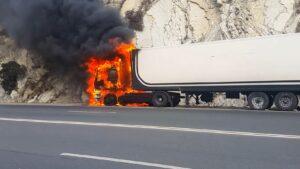
Most people expect the process to feel like a car claim. Instead, a semi-truck crash puts a commercial carrier, its insurer, and often a defense team on the other side before you leave the hospital.
Below, we explain what drives that early call, which documents do the most damage, and what Georgia law actually requires of you.
Why a Trucking Insurance Adjuster Calls Within Hours
Exposure explains the urgency. Federal rules require most interstate freight carriers to carry at least $750,000 in liability coverage, so a serious crash puts real money at risk.
Carriers organize around that risk. Many keep a rapid response team ready to reach a serious scene the same day.
Those teams do real work. Adjusters, investigators, and sometimes defense counsel photograph the scene, interview witnesses, and gather what helps the company.
Nobody is doing that for you yet. Therefore the early call is partly a race to reach you before a lawyer does.

Speak with a Charlotte car accident lawyer and get a free consultation today.
Call (980) 246-2656Why the Police Report Matters More Than You Think
Georgia requires a report. Under O.C.G.A. § 40-6-273, a driver in a crash involving injury, death, or apparent property damage of $500 or more must “immediately, by the quickest means of communication, give notice” to police.
That report anchors everything that follows. It records the scene, the drivers, the witnesses, and the officer’s first impressions before anyone’s story changes.
Delay carries its own risk. In hit-and-run cases, Georgia courts have denied uninsured motorist coverage where the crash went unreported for days.
Why Your Words at the Scene Follow You
Adrenaline makes people talk. A reflexive apology or a guess about speed can reappear months later in an adjuster’s file.
Those statements count as evidence. Consequently, an offhand remark can become the insurer’s main argument that you share the blame.
That matters because of Georgia’s fault rule. Under § 51-12-33, a jury reduces your recovery by your share of fault, and at 50 percent it disappears entirely.

Why You Still Report to Your Own Insurer
Your own policy matters more than most people realize. Policies usually require prompt notice, and your uninsured motorist coverage may become critical if the truck’s coverage falls short.
Georgia treats that coverage seriously. When a lawsuit involves a possibly uninsured vehicle, § 33-7-11(d) requires serving your own carrier “as though the insurance company were actually named as a party defendant.”
Reporting is not the same as explaining, though. You can give the basic facts without speculating about injuries you have not yet had diagnosed.
Why More Than One Adjuster May Call
Truck crashes often involve several companies. The driver, the motor carrier, the trailer owner, a freight broker, and a maintenance vendor may each carry separate coverage.
Each insurer protects its own client. As a result, you may hear from adjusters who quietly blame one another while all of them question you.
Identifying every policy early matters. Otherwise, the total coverage available can look far smaller than it really is.
What the Early Offer Is Actually Measuring
Early offers rest on thin information. Spinal injuries, soft tissue damage, and concussions often take weeks to declare themselves.
Maximum medical improvement changes that. Only when your physician confirms the condition has stabilized can anyone price the claim honestly.
Releases are nearly final too. Once you sign, you generally cannot return for more, however much worse things turn out.
Why Truck Injuries Take Time to Value
Serious injuries rarely follow a neat schedule. Surgery, rehabilitation, and follow-up care can stretch across months or years.
Future costs drive the real number. Life care planners, vocational experts, and treating physicians often need to weigh in before anyone can measure lost earning capacity.
An adjuster’s first offer skips all of that. Instead, it prices the claim on the bills that exist today.
The Document That Does the Most Damage
Here is the paper worth refusing. Adjusters frequently ask for a broad medical authorization rather than a narrow one.
Read the scope closely. A broad form opens your entire medical history, not just treatment connected to this crash.
The purpose is specific. Someone will comb those records for any prior complaint that might explain your injuries away.
So narrow authorizations exist for a reason. Indeed, this single signature often matters more than anything said on a recorded call.
What You Actually Owe Them
Very little, as it turns out. No contract binds you to the other side’s insurer, and no law requires you to narrate the crash for them.
Basic facts finish the obligation. Your name, your contact information, and the date and location of the collision cover it.
Our page on recorded statements explains what adjusters build from anything further. Still, the safer answer is simply to route them to counsel.
Why Georgia’s 2024 Change Keeps the Insurer Offstage
Georgia once let injured people name a motor carrier’s insurer as a defendant in almost any trucking case. A 2024 law narrowed that right sharply.
Now the insurer can be joined only in two situations. The carrier must be “insolvent or bankrupt,” or the driver or carrier must be impossible to serve after reasonable diligence.
That rule applies to claims arising on or after . As a result, the adjuster’s company usually stays behind the scenes at trial, even while it directs the defense.
How to Read an Offer That Arrives Too Early
Five signals suggest a number set for the company rather than for you:
- Timing. The offer lands before treatment finishes, or before it starts.
- Silence about the future. Nothing accounts for care you still need.
- Pressure. Someone hints the offer expires.
- No arithmetic. Nobody shows how the figure was built.
- No work discussion. Your earning capacity never comes up.
Why the Evidence Race Matters
The carrier’s investigators start immediately. Meanwhile, the records that prove what the driver did sit in the company’s own systems.
Electronic logs, engine data, dashcam video, dispatch messages, and maintenance files all have limited lifespans. A preservation letter puts the carrier on notice to keep them.
Our page on why a truck accident case differs explains how those records change the claim.
What Changes When a Lawyer Steps In
Communication moves to one channel. Every call, letter, and request from the insurer goes through counsel instead of to you.
The investigation starts on your side too. Preservation demands, policy requests, and independent reconstruction begin while the evidence still exists.
That shift changes the adjuster’s calculation. Consequently, an insurer facing a documented claim has far less room to rely on a quick, cheap release.
If You Already Talked to Them
Damage is rarely fatal. A lawyer can review what you said, address inconsistencies, and take over every later conversation.
Two things matter now. Stop communicating directly, and sign nothing until someone reviews it.
Georgia generally allows two years to file a personal injury action under O.C.G.A. § 9-3-33. Evidence runs on a far shorter clock.
Talk to a Norcross Truck Accident Lawyer
Shane Smith Law takes the adjuster calls so you can focus on recovering. We represent people hurt in truck crashes in Norcross, across Gwinnett County, and throughout Georgia. Call (980) 246-2656 for a free consultation.