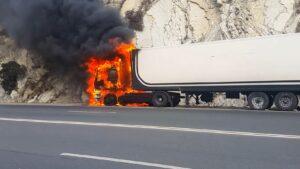
A car that strikes the back of a truck often slides beneath it. In a truck underride accident, the trailer bed passes over the hood and into the cabin. Crumple zones and airbags then offer little protection.
Most people assume the rear driver is automatically at fault. Georgia law does not work that way, and federal safety rules frequently put part of the blame on the truck.
Below, we explain what those rules require, why a slow or disabled truck changes the analysis, and what evidence decides these cases.
What Makes a Truck Underride Accident So Deadly
Height is the core problem. Because a trailer bed sits well above a car’s bumper, the strongest parts of the car can miss the truck entirely.
Rear impact guards exist to fix that. These steel bars hang below the back of a trailer. Their job is to stop a car before the cabin reaches the trailer bed.
Guards only work when they meet the standard and stay in good repair. A bent, rusted, or missing guard turns a survivable crash into a fatal one.

Speak with a Charlotte car accident lawyer and get a free consultation today.
Call (980) 246-2656What Federal Law Requires Behind a Trailer
The main rule is 49 CFR 393.86. It covers trailers and semitrailers rated at 10,000 pounds or more and built on or after .
Its measurements are specific. The gap beneath the guard “shall not exceed 560 mm (22 inches).” In addition, the guard must reach within 4 inches of each side and sit within 12 inches of the rear.
Guard strength has improved too. A 2022 federal rule set a tougher standard designed to protect occupants at 35 miles per hour. Compliance became mandatory on .
Some trailers fall outside the rule, however. The exceptions include pole trailers, pulpwood trailers, low chassis vehicles, special purpose vehicles, and “wheels back” designs.
Why Dump Trucks and Work Trucks Follow Weaker Rules
Single-unit trucks follow a different paragraph. Under § 393.86(b), a guard becomes necessary only when the empty truck’s rear edge sits over 30 inches high.
That allowance is looser than the trailer rule. A 30-inch clearance leaves more room for a car to slide under than the 22-inch trailer limit does.
Special purpose and wheels-back vehicles still owe protection, though. The regulation requires their structure to provide “rear end protection comparable to impact guard(s).”

Why Guard Condition Matters as Much as Design
Federal inspections now include the guard. Since December 2021, carriers must examine rear impact guards during every truck’s annual inspection.
That change created a paper trail. Inspection records show whether the carrier noticed damage and whether anyone fixed it.
Broader maintenance duties apply as well. Under 49 CFR 396.7(a), a truck may not run in a condition “likely” to cause “an accident or a breakdown of the vehicle.”
When a Slow or Disabled Truck Causes the Crash
Mechanical trouble can start these collisions. A truck limping along far below traffic speed creates a closing-speed hazard, especially at night or over a hill.
Georgia addresses that directly. Section 40-6-184 bars driving so slowly as “to impede the normal and reasonable movement of traffic.” The only exception covers slower speeds needed for safe operation.
Stopped trucks carry even clearer duties. Under 49 CFR 392.22, a driver must “immediately activate” the hazard flashers. Next, warning devices must go out “as soon as possible, but in any event within 10 minutes.”
Placement follows set distances. One device goes about 10 feet from the truck and another about 100 feet back. Near hills and curves, those distances grow.
Why Visibility Rules Matter at Night
Drivers can only avoid what they see. Under 49 CFR 393.11, most large trailers built after need retroreflective sheeting or reflectors.
Dirty, faded, or missing markings reduce that protection. As a result, the condition of the tape often becomes part of the evidence in a nighttime crash.
What Federal Law Does Not Yet Require
Side guards remain optional. No federal safety standard currently requires side underride protection on trailers.
Congress ordered more study in 2021. The Infrastructure Investment and Jobs Act directed research on side guards and an assessment of whether a standard is warranted.
That gap still matters in court. Even without a mandate, the feasibility of available safety equipment can become part of a product or negligence claim.
Why Georgia Does Not Blame the Rear Driver Automatically
Georgia assigns fault by percentage. Under O.C.G.A. § 51-12-33, a jury reduces your recovery by your share of fault. A share of 50 percent or more bars recovery.
That rule cuts both ways. A driver who followed too closely may carry some blame. Yet a trucking company that ran a crippled truck without flashers may carry more.
Our page on rear-end collisions in Georgia explains how juries weigh fault when a car strikes another vehicle from behind.
Who Can Be Responsible
Several parties may share the blame. The driver may have ignored warning procedures, while the carrier may have skipped repairs or inspections.
Others can appear in the chain too. For example, a manufacturer may have built a weak guard, or a repair shop may have missed obvious damage.
Our page on defective truck parts covers claims against manufacturers in more detail.
What Evidence Decides These Cases
Physical evidence comes first. The guard itself, the trailer, and the car’s damage show how far the vehicle traveled beneath the truck.
Records come next. Inspection reports, repair invoices, and engine data reveal what the carrier knew about the truck’s condition.
Scene evidence fills the gaps. Photos, video, and witness accounts show whether the flashers were on and whether anyone set out warning triangles.
Much of it disappears quickly. For that reason, a preservation letter to the carrier should go out as soon as possible.
Why Clayton County Drivers Face This Risk
Heavy freight moves through the county every day. Interstate 75, Interstate 285, and Interstate 675 all carry trucks through Clayton County, and the airport draws cargo traffic as well.
Highway speeds magnify the danger. A car closing on a slow or stopped truck at interstate speed has very little time to react.
Work zones and ramps add further risk. Trucks often slow sharply there, so warning devices and visible markings matter even more.
Why Insurers Blame the Rear Driver First
The first story usually favors the truck. An adjuster will point out that your vehicle struck from behind and treat that fact as the end of the analysis.
That framing skips the harder questions. Why was the truck moving so slowly? Were the flashers on, and did the guard meet the standard?
Answers to those questions shift percentages. Consequently, an investigation that starts with the truck rather than the car often changes the outcome.
What a Family Can Recover
Underride crashes are often fatal. Georgia then allows two separate claims, one for the family and one for the estate.
The family claim measures the full value of the life. Under § 51-4-1, recovery runs “without deducting for any of the necessary or personal expenses of the decedent had he lived.”
The estate claim covers other losses. Funeral costs, medical bills, and the pain suffered before death all belong there.
Survivors with serious injuries have their own claims too. Head, neck, and spinal injuries from underride crashes often require years of care.
How Long Your Family Has
Two years is the general deadline under O.C.G.A. § 9-3-33, and a fatal crash follows Georgia’s wrongful death rules. Our page on Georgia wrongful death claims explains who may bring those claims.
Talk to a Clayton County Truck Accident Lawyer
A crash beneath a truck is rarely as simple as it looks. Shane Smith Law investigates the guard, the maintenance records, and every duty the carrier owed. Call (980) 246-2656 for a free consultation.