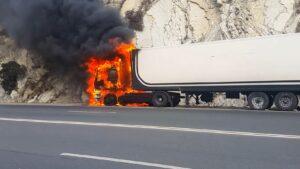
Large trucks move through Coweta County every day on I-85, U.S. 29, and Highway 34. When one of those trucks tips over, the danger spreads far beyond the truck itself. A Coweta County truck rollover can crush nearby cars, scatter cargo across lanes, and trigger fires or chemical spills. It’s important to examine why trucks roll, why spilled cargo makes these crashes so destructive, and who may be responsible.
How Common Are Serious Truck Crashes?
Crashes involving large trucks cause enormous harm nationwide. According to NHTSA, crashes involving large trucks killed 5,472 people in 2023. Roughly 153,000 more suffered injuries that year.
Unfortunately, Georgia shares that burden. In 2024, large-truck crashes killed 197 people in the state. Most of those victims were in other vehicles, not in the truck.

Speak with a Charlotte car accident lawyer and get a free consultation today.
Call (980) 246-2656What Happens in a Truck Rollover
Simply put, a rollover occurs when a truck tips onto its side or roof. At that point, the driver loses nearly all control. The truck may slide across several lanes, strike other vehicles, or hit barriers and poles.
Trucks roll more easily than cars because they carry weight high off the ground. A sharp turn, a sudden swerve, or a shifting load can push that weight past the tipping point. In addition, a partly filled tanker can slosh and add sideways force at the worst moment.
Common Causes of a Coweta County Truck Rollover
Many rollovers trace back to a few familiar causes:
- Speeding, especially on curves and exit ramps
- Overcorrecting after drifting from the lane
- Hard braking or swerving to avoid traffic
- Tire blowouts
- Striking a curb, median, or other object
- Unbalanced, overloaded, or unsecured cargo
- Coupling failures between the tractor and trailer
- High winds, particularly with empty or light trailers
Each cause points to different evidence and different defendants in the case. For example, a speeding driver points to the trucking company’s training and schedules. By contrast, a shifting load may point to the shipper that packed the trailer.

Why Spilled Cargo Makes Rollovers So Destructive
A rollover rarely ends when the truck stops moving. Instead, the trailer often breaks open and spills its load. Moreover, heavy cargo can strike passing cars or block every lane at once.
Worse, spills create chain reactions. Drivers who come upon debris may swerve, brake hard, or lose control. As a result, a single rollover can cause several separate crashes, each with its own injuries.
Beyond that, some cargo creates even greater danger. For example, fuel and other flammable loads can ignite, causing fires and burns. Chemical loads may release fumes or liquids that injure drivers and first responders. Cleanup can close a highway for hours and expose more people to harm. Families stuck in that traffic may breathe fumes for a long time.
When Hazardous Cargo Is Involved
Hazardous materials follow stricter federal rules for packaging, placards, and handling. Carriers hauling certain hazardous loads must also carry higher insurance than ordinary freight carriers. That coverage can matter a great deal in a serious case.
Notably, chemical exposure injuries may not appear right away. Breathing problems, skin damage, and eye injuries can develop over hours or days. Therefore, medical records that document exposure become important evidence.
Why Empty and Light Trailers Still Roll
Many people assume only heavy trucks tip over. In fact, empty or lightly loaded trailers face their own risk. A tall, light trailer catches wind like a sail, especially on open stretches of highway.
Strong crosswinds during storms can push these trailers onto their sides. Drivers and carriers must decide whether conditions are safe for travel. Federal rules require extreme caution in hazardous weather, and in some cases they require drivers to stop. A carrier that pushes a driver to keep moving in dangerous wind may share responsibility for a rollover.
When First Responders and Bystanders Get Hurt
Rollovers often injure people who arrive after the crash. Drivers who stop to help may face fire, fumes, or traffic. Some suffer injuries far worse than those in the original crash. Police, firefighters, and tow operators also work in dangerous conditions around the wreck.
These injured people may also have claims. The same companies responsible for the rollover may answer for injuries that follow it. However, each claim depends on its own facts and timing.
Who May Be Responsible
Typically, a truck rollover involves several companies. Possible responsible parties include:
- Truck driver: for speeding, distraction, fatigue, or unsafe maneuvers
- Trucking company: for poor training, unrealistic schedules, or skipped maintenance
- Shipper or loader: for overloaded, unbalanced, or poorly secured cargo
- Maintenance provider: for faulty brakes, tires, or coupling work
- Manufacturer: in some cases, for a defective tire or trailer part
Importantly, Georgia divides fault among everyone responsible. Under O.C.G.A. § 51-12-33, a jury assigns each party a percentage. If you are 50% or more at fault, you recover nothing.
How Chain-Reaction Crashes Complicate Fault
When a rollover causes several crashes, fault becomes harder to sort out. A driver who struck debris may share some blame. Meanwhile, the trucking company may argue that other drivers followed too closely.
Left unanswered, those arguments can shrink a recovery. Under Georgia’s apportionment rules, each defendant generally pays only its own share. Identifying every responsible party, and the full chain of events, protects the value of your claim.
Why Coweta County Roads See Rollovers
Interstate 85 carries heavy freight through Newnan and past the county’s distribution centers. Interchange ramps at busy exits force trucks to slow and turn sharply. Meanwhile, U.S. 29 and Highway 34 mix truck traffic with local drivers, curves, and intersections.
Together, these conditions create rollover risk at predictable spots. A truck that takes a ramp too fast, or swerves at a crowded intersection, can tip in seconds. Nearby drivers often have no chance to escape the danger.
Why Evidence Disappears Quickly
Typically, road crews clear rollover scenes fast because they block traffic. Crews haul away spilled cargo and tow the truck within hours. As a result, physical evidence of how the load sat can vanish quickly.
Similarly, electronic records face their own clock. Engine modules store speed and braking data, while logs show driving hours. Federal rules let carriers discard some of these records after six months. A preservation letter from a lawyer can stop routine destruction.
What a Truck Rollover Claim Can Cover
Rollover crashes often cause severe injuries, including brain injuries, spinal damage, crushed limbs, and burns. A claim may include hospital care, surgery, rehabilitation, and future treatment. It can also cover lost income and reduced ability to work.
Additionally, Georgia law allows recovery for pain and suffering. When a crash takes a life, the family may bring a wrongful death claim. Federal rules require most interstate carriers to carry at least $750,000 in liability coverage.
Why Hire a Lawyer After a Truck Rollover
In short, rollover cases involve technical evidence about speed, cargo, and equipment. Trucking companies and shippers often blame each other. Without an independent investigation, an injured person can end up caught in the middle.
For these reasons, a lawyer can preserve the truck, its data, and the cargo records early. Your attorney can also work with reconstruction experts to show why the truck tipped. Georgia generally allows two years to file an injury lawsuit, but key evidence can disappear much sooner.
For more on why trucks tip over, see our truck rollover accident page.
Contact a Coweta County Personal Injury Attorney for a Free Consultation
If a truck rollover injured you or someone you love, Shane Smith Law can review your case for free. We will explain who may be responsible and which deadlines apply. You pay no attorney fee unless we recover money for you.
Call 980-246-2656 today to talk with our team about your options.