
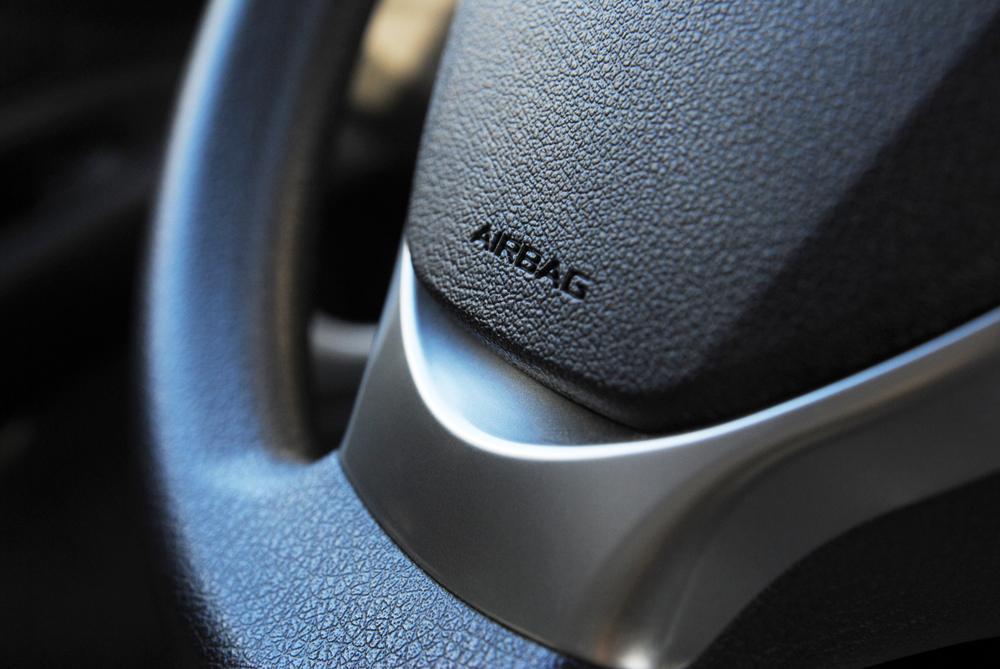

Should my airbags have deployed during my car accident? Determining if your airbags should have deployed depends on the force and angle of impact, sensor calibration, and seatbelt usage, which can prevent functioning airbags from working correctly.
When airbags don’t deploy during a crash, they can cause serious harm. A Charlotte car accident lawyer can help you file a claim to recover your losses.
How Airbags are Designed to Work
Many people falsely believe that airbags deploy in a collision, no matter what. However, airbags are not designed to deploy in all crashes, which is why sensors exist in airbags. In general, airbags are supposed to deploy during collisions that involve moderate or severe impact and occur primarily toward the front of the vehicle.
Determining whether or not your airbags should have deployed depends on a variety of factors, which can vary significantly from accident to accident. In general, though, if a vehicle is struck with enough force, sensors in an airbag trigger the airbag to quickly and forcefully inflate with nitrogen gas to stop your momentum and prevent you from hitting the steering wheel or dashboard in front of you.
Because of the force of deployed airbags or the lack thereof if they fail to inflate, that’s why airbags don’t always prevent injuries in a car accident. The force of the airbag or the impact with the interior cabin can exert too much pressure on the body and cause numerous injuries. As such, this is just one of the many reasons to receive medical treatment after an accident.

Speak with a Charlotte car accident lawyer and get a free consultation today.
Call (980) 246-2656Understanding the Placement of Airbags and Their Impact on Accidents
When people think of airbags, they generally picture the steering wheel and passenger dashboard area. While these are common places for airbags, they are not the only ones. Airbags may also be located on the sides of a vehicle. Some vehicle models also include inflatable seat belts, far-side airbags, heel airbags, sunroof airbags, and seat cushions. Options can vary by vehicle manufacturer.
Each airbag placement is designed to serve a different purpose and deploy under different conditions. For example, front airbags are designed to mitigate the impact on the head and chest during a front-facing crash, while side airbags protect the same areas in side-impact collisions and rollover accidents. Airbags deploy only in specific impact zones when sensors are triggered.
When any one of these airbags doesn’t deploy during an accident, occupants absorb the impact of the collision itself, as well as take a direct hit from the vehicle’s hard surfaces, such as the steering wheel and windows. This further exacerbates the extent of the damage in a car accident and can cause a greater number of severe injuries.
Force of Impact Affects How Airbags Deploy in a Car Accident
Whether or not your airbags deploy depends on the force of impact during a collision. For example, if another driver was speeding, the force of the impact is likely to be much stronger and trigger your vehicle’s airbag system. However, for a collision like a fender bender, the impact is generally minimal and probably will not be enough to cause your airbag to deploy.
Factors such as these heavily influence the answer to whether or not your airbags should have deployed. Because speed makes a difference, an airbag can work properly but still not deploy in some situations. That is why it is not uncommon for people who have just been in a car accident to ask why the airbags didn’t deploy, and it leads them to wonder if they can sue the airbag company.
Impact is just one of the variables that must be considered, which is what makes the reason why airbags did or didn’t deploy much more complex. During a claim, insurance adjusters investigate the speeds involved in an accident to determine how an airbag should have behaved. Additionally, the lawyer handling your case may turn to professional reconstructionists to simulate the crash and get answers.

Airbag Deployment Can be Influenced by the Direction of Impact
The angle of impact is another important factor in determining if airbags should have deployed. The majority of airbags are situated in the front and sides of cars. This means that head-on, t-bone, and related frontal collisions are more likely to cause your airbag to deploy than a rear-end collision. Some vehicles may have airbags elsewhere throughout the vehicle, depending on the vehicle manufacturer.
Airbags generally deploy in the specific area that’s been hit. This means if you’re hit head-on, the sensors in the front of the vehicle may determine that the steering wheel and/or passenger dashboard airbags may deploy, while a side-impact accident is more likely to trigger the airbags on the side of the vehicle instead. This minimizes unnecessary deployment and provides protection where it’s needed most.
Because airbags are designed to go off when they are triggered by direct impact or meet a certain force threshold, deployed airbags in a car accident are more likely to be localized. So if you’ve been involved in a minor rear-end collision, it may be completely normal for your front airbags not to have gone off. Talking to a lawyer and a mechanic can help you understand what is normal for your situation.
Airbag Calibration May Vary Depending On Manufacturer
It is expensive to repackage an airbag after it has deployed. This can cost over a thousand dollars per airbag. To minimize the financial burden this would put on drivers, car companies have designed airbags and vehicles with sensors that determine the type of car crash. The signals are then sent to a black box or internal computer, which determines whether the car should deploy the airbags.
To ensure these sensors go off at the right times, they must be properly calibrated. These sensors are designed to detect the speed and force of a collision and control the force and timing with which the airbag deploys and how it fills with air. Depending on how the vehicle’s sensors are calibrated, a vehicle could register that a collision is below the trigger threshold for deploying the airbags.
A vehicle’s sensor calibrations may vary among different vehicle manufacturers. This is partly because airbag types and sensor systems can vary across the board and require different sensors and controls to work properly. Calibration must be finely tuned to the system and vehicle itself. As such, there isn’t one standard airbag sensor system or calibration system.
Airbags Work in Tandem With Seat Belts
If you’ve ever noticed the passenger airbag light turn on or off in your vehicle, you’ve observed how airbags work in tandem with seat belts without even realizing it. Seat belts often have sensors of their own that detect when weight is applied to a seat. This can trigger your car to warn you if a seatbelt is needed and transition your airbag to a more active state so it can deploy if needed.
Seatbelts and airbags work together to protect vehicle occupants and prevent them from suffering serious injuries from a collision. One way they do this is to keep the occupant in place within their seat and to cushion the space between the occupant and the interior of the cabin. These systems work together to minimize impact.
The calibrated sensors in seatbelts and airbags also work together and affect how the deployment of airbags in a car accident functions. Seatbelt sensors can communicate to airbag sensors whether or not an airbag is needed. Seatbelt usage can affect whether or not an airbag releases or how much force is needed during deployment. This can affect what should happen to your airbags in a collision.
Common Injuries That Can Occur When Airbags Don’t Deploy
The harm caused by failed airbags can look similar to common injuries from airbag deployment. While airbags can cause injuries due to the force with which they inflate, injuries caused by failed deployment can be worse because there is nothing to buffer the impact of the crash. It also increases the likelihood of hitting the hard surface of the car’s interior. Injuries in these situations can include:
- Face injuries and abrasions
- Injuries to upper and lower limbs
- Neck injuries
- Rib and chest injuries
- Spinal cord injuries
- Traumatic brain injuries
- Damage to internal organs and bleeding
- Broken bones
- Lacerations, bruises, and other soft tissue injuries
- Whiplash
- Burn injuries
- Wrongful death
Without the cushion of an airbag, injuries are more likely to be severe and even fatal. Getting medical care after such an event is essential for treating obvious injuries and addressing those that may be hidden or delayed. Treatment records should be kept, and details about the airbags not deploying should be included in the police report so there is written documentation of what occurred.
Your Rights After a Car Accident in Georgia
Whether or not your airbags deployed during a car accident, you likely still suffered injuries and damage to your vehicle. When these losses were caused by another driver, you have the right to take legal action and file a car accident claim to hold them accountable and recover the losses you have suffered. You also have the right to hire an experienced lawyer to represent you and negotiate for you.
You also have the right to file a police report to document the details of the accident, where you should also make note of what your airbags did or didn’t do during the collision. You should also take advantage of your right to take pictures and videos of your damaged vehicle, airbag areas, and the injuries you suffered.
A Personal Injury Claim Can Help You Recover Losses You Suffered When Your Airbag Didn’t Deploy
If your airbags failed to deploy, you could be facing exorbitant medical bills and other losses that can deeply affect your well-being and future. Trying to recover financially, in addition to physically, can be incredibly overwhelming and arduous. When you hire a Charlotte personal injury lawyer, they can handle the negotiations on your behalf and aggressively fight for you. Recoverable losses may include:
- Current and future medical expenses
- Lost wages or earning capacity if you can’t work because of your injuries
- Expenses related to replacing or repairing damage to your vehicle or personal property
- Funeral and burial expenses if the accident results in wrongful death
- Pain and suffering from what you’ve experienced
- Emotional trauma, PTSD symptoms, anxiety, and depression
- Lost quality of life
- Disfigurement
- Loss of consortium
The value of your settlement depends on the specific losses you’ve suffered and how severe they are. You may also require ongoing treatments or permanent medical support, which can be factored into a settlement. Individuals who hire legal representation often get better results because lawyers are skilled negotiators who know how to get the compensation you deserve.
File Your Car Accident Claim Before the Statute of Limitations Expires
Action to recover compensation for injuries caused by airbags that didn’t deploy must be taken within two years of the accident, per O.C.G.A. §9-3-33.
It’s better to talk to a lawyer sooner rather than later to gain clarity on your options and determine how to proceed with your car accident claim. Waiting too long to file a claim could leave you shouldering the expense of your losses yourself.
Schedule a Free Consultation With the Team at Shane Smith Law
If you live in one of these areas and have suffered injuries because your airbags should have deployed and didn’t, our team can help you fight to secure compensation.
We can review the details of your accident and determine effective strategies that protect your rights and get results. Schedule a free consultation with Shane Smith Law today to get started and meet our team of personal injury attorneys.


