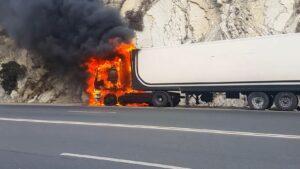


I-77/I-85 interchange truck accidents happen at one of North Carolina’s most freight-saturated highway junctions. The intersection sits north of uptown Charlotte where two of the Southeast’s primary commercial corridors collide — and the geography, traffic volume, and merging patterns combine to make it one of the most dangerous trucking locations in the state.
For Charlotte residents and the long-haul drivers who pass through daily, understanding why this interchange generates so many serious crashes can help with route planning. Furthermore, for crash victims, understanding the dynamics of the location can shape how a Charlotte trucking accident lawyer approaches the case.
Why This Interchange Carries So Much Truck Traffic
I-77 runs north-south, connecting Columbia, South Carolina, with Cleveland, Ohio. Its Charlotte segment carries freight between the Carolinas and the Midwest. I-85, meanwhile, runs roughly northeast-southwest, connecting Atlanta with Richmond and points north. Specifically, the interstate handles freight between the Deep South and the Mid-Atlantic.
Where the two corridors cross north of Charlotte, an enormous volume of commercial traffic converges. Furthermore, the area sits within a regional distribution hub network — Charlotte itself is one of the Southeast’s largest logistics centers, with warehouses and freight terminals spreading along I-485 and into Cabarrus, Gaston, and Iredell counties.
The result is sustained heavy truck volume on both interstates, with the interchange itself absorbing converging traffic from both directions of both highways simultaneously.

Speak with a Charlotte car accident lawyer and get a free consultation today.
Call (980) 294-4931The Geometric Problem at the Interchange
Modern interstate interchanges are typically designed for a particular traffic volume and vehicle mix. As volume grows beyond design capacity, predictable problems emerge — and the I-77/I-85 interchange has grown well beyond its original capacity.
Specific geometric issues that contribute to crashes include:
- Short merge zones that don’t give 80,000-pound rigs enough distance to match speed
- Tight ramp curves that force trucks to slow significantly while passenger vehicles maintain speed
- Multiple lane changes required within short distances
- Sight-line obstructions on certain curves
- Frequent construction and lane closures that compress already-constrained traffic patterns
For passenger car drivers, these design issues are inconvenient. However, for trucks, they’re dangerous. A semi navigating a tight ramp at the wrong speed can jackknife. Furthermore, a loaded trailer changing lanes through a short merge can sideswipe. Brake-heavy approaches to tight curves also wear out brake systems faster than ordinary highway driving.
Common I-77/I-85 Interchange Truck Accidents
Certain crash types recur at this interchange more than other Charlotte locations. Understanding the patterns helps explain how the cases unfold legally.
Rear-End Collisions in Stop-and-Go Traffic
Heavy truck volume combined with frequent slowdowns produces rear-end collisions at unfortunate frequency. Specifically, an 80,000-pound rig requires substantially longer stopping distance than a passenger car. When traffic suddenly slows on the interchange, trucks following too closely can’t stop in time. Damage to the lead vehicle is often catastrophic.
Sideswipes in Lane Changes
Tight lane configurations and short merge zones mean trucks must change lanes quickly. Furthermore, a semi has substantial blind spots — the “no-zones” on the right side and immediately ahead of the cab. As a result, lane-change crashes between trucks and passenger vehicles are unusually common at this interchange.
Jackknife Crashes on Curves
The interchange’s ramp curves require careful speed management. When a driver brakes hard mid-curve — to avoid traffic ahead, navigate weather, or correct a misjudged speed — the trailer can swing out at an angle to the cab. Indeed, jackknife crashes at this interchange have caused multi-vehicle pileups blocking traffic for hours.
Chain-Reaction Wrecks
The combination of heavy traffic volume, mixed vehicle types, and constrained roadway means a single trucking incident can cascade into multi-vehicle pileups. Charlotte has seen multiple chain-reaction crashes at or near this interchange involving 5+ vehicles, with the original triggering event involving a commercial truck.

Time-of-Day and Weather Factors
Crash data shows certain conditions amplify the inherent risks of the interchange.
Rush-hour traffic compresses already-tight following distances. Furthermore, morning and evening commute patterns produce stop-and-go conditions that don’t match the 70+ mph design speeds of the highway sections leading into the interchange. Truckers passing through Charlotte during commute windows face the worst combination of conditions.
Wet road conditions multiply the risk. Stopping distance for a loaded semi can double on wet pavement. Indeed, the most catastrophic chain-reaction crashes at this interchange tend to happen during rain — particularly the first rain after a dry period, when oil residue makes the pavement especially slick.
Nighttime crashes are disproportionately serious. Reduced visibility combined with truck driver fatigue (this stretch is often hours into long-haul shifts) produces the most severe outcomes.
Why Cases at This Interchange Are Often Complex
Trucking accidents at the I-77/I-85 interchange frequently involve out-of-state carriers. Long-haul freight moving through Charlotte rarely originates with a local trucking company. As a result, victims may be facing carriers based in Texas, Ohio, or Florida, with insurers scattered across the country.
Furthermore, the multi-vehicle nature of many interchange crashes complicates fault determination. When five vehicles are involved in a chain-reaction, sorting out who hit whom — and who carries what percentage of fault — requires accident reconstruction expertise. Importantly, NC’s contributory negligence rule makes that fault assignment especially consequential.
Federal jurisdiction often applies. Specifically, interstate trucking accidents involving out-of-state defendants can be removed to federal court — a venue with different procedural rules than state court.
For more on Charlotte’s most dangerous trucking corridors, see our Charlotte trucking accident lawyer page.
What This Means If You’ve Been Hurt at the Interchange
If you’ve been injured in a trucking crash at or near the I-77/I-85 interchange, the geographic specifics of the location matter for your case. Specifically, an experienced Charlotte trucking accident lawyer will:
- Understand the recurring crash patterns at the interchange
- Know which corridors and lane configurations contribute to specific crash types
- Have experience with the multi-vehicle, multi-defendant cases that arise from the location
- Be familiar with the federal regulations applicable to long-haul carriers passing through
- Have established working relationships with local accident reconstructionists familiar with the area
This local knowledge is part of why hyper-local representation matters in catastrophic trucking cases. Indeed, a national billboard firm running cases from another state often misses location-specific factors that local counsel would catch immediately.
Talk to a Charlotte Trucking Accident Lawyer Today
Shane Smith Law’s Charlotte office sits just minutes from the I-77/I-85 corridor. We know the interchange. Furthermore, we know the kinds of trucking cases that arise from it — and how to build them.
The consultation is free. We work on contingency, meaning no fee unless we win.
Call (980) 246-2656 today. Or learn more on our Charlotte trucking accident lawyer page.