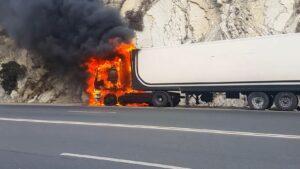


A tow truck accident Charlotte interstate victims face presents unique liability issues unlike ordinary commercial vehicle crashes. Specifically, tow trucks operate adjacent to active high-speed traffic, perform recoveries that block lanes, and tow loaded vehicles at speeds that strain coupling equipment. Furthermore, the operator population mixes NCDOT IMAP contractors with private tow services and repossession operators. As a result, identifying every responsible party in a Charlotte tow truck crash requires investigating who operated the truck and under what authority.
Here’s how tow truck crashes happen on Charlotte interstates and what makes these cases legally distinct.
Why the Tow Truck Accident Charlotte Interstate Risk Stays High
Tow trucks face inherent risks that other commercial vehicles don’t share. Critically, the operational pattern of tow operations creates specific hazard conditions.
Several factors elevate tow truck risk on Charlotte interstates:
- Recovery operations require stopping in active traffic lanes
- Loading and securing maneuvers expose operators to passing traffic
- Loaded tow trucks face altered handling characteristics and longer stopping distances
- Coupling and securement equipment must perform reliably at highway speeds
- Operators face fatigue from 24-hour-call operational patterns
- Move Over Law violations by passing motorists create struck-by risks
Furthermore, Charlotte’s interstate network sees enormous tow truck activity. Indeed, the I-77, I-85, and I-485 corridors generate continuous recovery operations from breakdowns, crashes, and traffic enforcement.

Speak with a Charlotte car accident lawyer and get a free consultation today.
Call (980) 294-4931The Major Tow Truck Operator Categories
Charlotte tow truck operations fall into several distinct categories. Critically, the operator’s authority changes the liability analysis.
NCDOT IMAP Contractors
The North Carolina Incident Management Assistance Patrol (IMAP) program contracts with private tow operators to handle disabled vehicle and crash response on major freeway corridors. Specifically, IMAP operators respond to incidents identified by NCDOT cameras and dispatch systems. Furthermore, IMAP operators perform their work under state contract while operating private equipment.
Private Commercial Tow Services
Hundreds of private tow companies operate throughout the Charlotte metro. Specifically, these operations include AAA contractors, insurance company response networks, and independent operators responding to direct customer calls. As a result, the operator pool varies enormously in training, equipment quality, and safety practices.
Repossession Operators
Repossession agents recover vehicles for lenders, dealerships, and finance companies. Notably, repo operations carry elevated risk because they often involve resistant owners and operations conducted under time pressure. Indeed, repossession crashes frequently involve specific tactical patterns that don’t appear in ordinary tow operations.
Police-Directed Tows
CMPD and other local law enforcement direct tow operations for impounds, abandoned vehicles, and crash recoveries. Furthermore, police-directed tows often involve rotation systems that route work to specific operators based on jurisdiction agreements.
The Specific Crash Patterns on Charlotte Interstates
Tow truck interstate crashes follow recurring scenarios:
Operator Strike Incidents
When working on shoulders or in closed lanes, tow operators face strike-by risk from passing traffic. Specifically, North Carolina’s Move Over Law requires drivers to change lanes or slow significantly when passing emergency vehicles, tow trucks, and disabled vehicles. As a result, violations of the Move Over Law generate operator injury crashes routinely.
Secondary Crashes During Recovery
Recovery operations sometimes create secondary crash hazards. Specifically, when a tow truck enters traffic to position for a recovery, the slowing or stopping of the truck creates rear-end collision risk for following motorists. Furthermore, lane changes by other vehicles trying to avoid the recovery area produce additional conflict points.
Loaded Tow Truck Crashes
Loaded tow trucks face altered handling characteristics. Specifically, the towed vehicle’s weight affects braking, steering response, and stability. Notably, improperly secured loads can shift during transport, creating control problems for the tow operator.
Coupling Failure Crashes
When tow chains, slings, or wheel-lift mechanisms fail, the towed vehicle can separate from the tow truck. Furthermore, separation at highway speeds turns the towed vehicle into uncontrolled mass moving through active traffic. Indeed, coupling failure crashes produce some of the most severe tow-related incidents on Charlotte interstates.
Repossession-Related Crashes
Repossession operations sometimes produce crashes during contested recoveries. Specifically, when vehicle owners attempt to interfere with repossession in progress, dangerous traffic situations can develop. As a result, repo crashes generate unique legal questions about who bears liability for the resulting harm.

The Move Over Law and Its Civil Implications
North Carolina’s Move Over Law (N.C.G.S. § 20-157(f)) requires drivers approaching emergency vehicles, tow trucks, and similar stopped vehicles to change lanes when possible or substantially reduce speed. Critically, violations of this law create civil liability beyond the criminal penalty.
The civil implications include:
- Negligence per se when a Move Over violation contributed to the crash
- Strong evidence of carelessness when violations occurred
- Increased damages exposure for drivers who struck tow operators
- Insurance coverage analysis tied to violation findings
Furthermore, dashcam and freeway camera evidence often establishes whether violations occurred. Indeed, NCDOT IMAP cameras frequently capture both the recovery operation and the approaching traffic.
The Specific Charlotte Interstate Hotspots
Several Charlotte freeway segments generate elevated tow truck activity and crash volumes:
- The I-77 corridor through South Charlotte and into Pineville
- The I-85 stretch through northeast Mecklenburg and into Cabarrus County
- The I-485 outerbelt loop in its entirety
- The I-77/I-85 interchange north of uptown
- The I-277 inner loop around uptown Charlotte
- The Brookshire and Belk Freeways
- US-74 (Independence Boulevard) through East Charlotte
Furthermore, these corridors combine high traffic volumes with the breakdown and crash rates that generate tow demand. Indeed, the I-485 and I-77/I-85 areas in particular produce continuous tow operations throughout each day.
Evidence Sources in Tow Truck Crashes
Tow truck crashes generate evidence requiring prompt preservation:
- NCDOT IMAP cameras at most major freeway interchanges
- Dashcam footage from the tow truck and surrounding vehicles
- The tow operator’s dispatch records and time stamps
- GPS and telematics data from the tow truck
- Communications between operator and dispatch during the operation
- Equipment inspection and maintenance records
- The operator’s qualification file and prior incident history
- 911 calls and CMPD dispatch records
Critically, NCDOT camera footage has short retention windows. Furthermore, dispatch records from tow operations may be overwritten as routine business practice unless preservation requests arrive promptly.
What This Means for Your Charlotte Truck Accident Case
If a tow truck on a Charlotte interstate caused your crash, the case typically involves either the operator directly, the company behind the operator, or the entity that dispatched the tow. Furthermore, when a Move Over Law violation contributed, the case often reaches additional defendants with separate coverage. However, building the case requires immediate investigation of the dispatch records, camera evidence, and equipment condition.
Talk to a Charlotte Truck Accident Lawyer Today
Shane Smith Law handles tow truck crashes throughout Charlotte’s interstate system. We know how to investigate IMAP operations, private tow services, and repossession cases — and how to pursue every available defendant.
The consultation is free. We work on contingency — no fee unless we win.
Call (980) 246-2656 today. Or learn more on our Charlotte truck accident lawyer page.