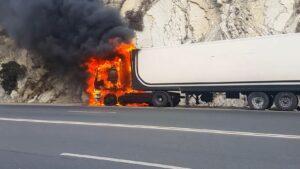


Trucking driver fatigue contributes to roughly 13% of large-truck crashes nationwide, according to Federal Motor Carrier Safety Administration estimates. That figure makes fatigue one of the leading causes of catastrophic 18-wheeler wrecks — alongside distracted driving and impairment. Furthermore, fatigue-related trucking crashes rarely result from a single tired driver making an isolated bad decision. Instead, they typically reflect systemic pressures applied by carriers and dispatchers that push drivers past safe operating limits.
Here’s how driver fatigue actually develops, why trucking companies often share fault for fatigue-related crashes, and what your Charlotte trucking accident lawyer can do about it.
How Trucking Driver Fatigue Affects Performance
Fatigue is not just being a little tired. Indeed, severe driver fatigue produces cognitive and motor impairment comparable to alcohol intoxication. Specifically, research has shown that:
- 17 hours awake produces impairment equivalent to 0.05% blood alcohol content
- 21 hours awake produces impairment equivalent to 0.08% BAC — the legal limit for most drivers
- 24+ hours awake produces severe impairment exceeding most legal DUI thresholds
For commercial drivers operating 80,000-pound rigs at highway speeds, that level of impairment is catastrophic. Reaction time slows. Lane discipline degrades. Furthermore, microsleeps — brief unconscious periods lasting seconds — become frequent. A microsleep at 65 mph means a truck travels nearly the length of a football field with no driver awareness.

Speak with a Charlotte car accident lawyer and get a free consultation today.
Call (980) 246-2656What Federal Rules Are Supposed to Prevent
Federal hours-of-service (HOS) regulations exist specifically to prevent severe driver fatigue. The basic limits:
- Maximum 11 hours of driving in a 14-hour shift
- 10 consecutive hours off duty between shifts
- 30-minute break required after 8 hours of driving
- Maximum 60 hours in 7 days OR 70 hours in 8 days
- Mandatory 34-hour reset to restart the weekly count
These rules aren’t suggestions. Specifically, they’re federally enforceable safety regulations with significant penalties for violations. Furthermore, when a fatigue-related crash occurs after an HOS violation, the violation establishes negligence per se under federal law.
Why Drivers Push Past Their Limits
Most fatigue-related trucking crashes don’t happen because a driver decided to be reckless. Instead, they happen because of systematic pressures that make compliance with HOS rules economically and professionally costly. Common pressures include:
Mileage-Based Pay
Most commercial drivers are paid by the mile, not by the hour. As a result, time spent resting is time not earning. Furthermore, drivers who consistently take full rest breaks earn less than drivers who push past safe limits. The pay structure itself incentivizes fatigue.
Tight Delivery Deadlines
Carriers compete on delivery speed. As a result, dispatchers often assign loads with deadlines that can only be met by minimizing rest time. Drivers who refuse to push past HOS limits may receive fewer loads or less desirable assignments going forward.
“Just-in-Time” Logistics Demands
Modern supply chain management depends on extremely tight delivery windows. Manufacturers and retailers often require deliveries within narrow time slots. As a result, even modest delays cascade into pressure on the driver to make up time on the road.
Detention Time Penalties
When a driver is held up at a shipper or receiver for hours waiting to load or unload, that time often counts against the driver’s available HOS clock. Furthermore, drivers don’t get paid for most detention time. As a result, they have a strong incentive to “make up” lost time by extending driving hours later.
Job Insecurity
Drivers who report unrealistic dispatching demands or refuse unsafe assignments may face termination, reduced loads, or blacklisting in the industry. Indeed, federal whistleblower protections exist precisely because retaliation against drivers who follow safety rules has been a documented industry problem.

How Carrier Liability Works in Fatigue Cases
Trucking accident cases involving fatigue often expand beyond the driver to include the carrier as a direct defendant. Several legal theories support carrier liability:
Respondeat Superior
The most basic theory: the carrier employs the driver and is responsible for the driver’s negligence committed within the scope of employment. As a result, even when the carrier didn’t directly pressure the driver, vicarious liability typically attaches.
Negligent Hiring and Retention
When a carrier hires a driver with a documented history of HOS violations, prior fatigue-related incidents, or other safety problems, the carrier faces direct negligence liability. Specifically, the theory is that the carrier knew or should have known the driver presented a risk.
Negligent Training
Federal regulations require carriers to ensure drivers are properly trained. If training records are inadequate, missing, or fail to address HOS compliance, the carrier may face direct liability for fatigue-related crashes.
Negligent Dispatching
When a carrier’s dispatcher assigns loads that can only be completed by exceeding HOS limits, that assignment itself may constitute negligence. Furthermore, internal dispatch records, GPS data, and driver communications often reveal exactly this kind of dispatching pressure.
Systemic Safety Culture Failures
Some carriers have systematic patterns of HOS violations across their entire fleet. When that pattern can be established — through prior crashes, prior violations, FMCSA inspection data, and former driver testimony — the carrier faces enhanced liability for crashes that were predictable consequences of the pattern.
What Evidence Establishes Fatigue and Carrier Pressure
Fatigue cases rely on multiple categories of evidence. Specifically, Charlotte trucking accident lawyers typically pursue:
- ELD records showing the driver’s actual hours leading up to the crash
- Dispatch logs showing what the carrier knew about the driver’s status
- Communications between the driver and dispatch (especially messages reflecting pressure)
- The driver’s pay records and per-mile rate structure
- Prior driver complaints or grievances about scheduling demands
- FMCSA inspection history showing the carrier’s pattern of HOS compliance
- Driver depositions exploring the operational pressures applied
- Former driver testimony about the carrier’s safety culture
This evidence is rarely volunteered by the carrier. Instead, it has to be subpoenaed, preserved with spoliation letters, and developed through depositions and discovery requests.
What Fatigue Cases Mean for NC Contributory Negligence
Driver fatigue cases interact with NC’s pure contributory negligence rule in important ways. Specifically, severe fatigue combined with HOS violations often supports:
- Negligence per se findings (which neutralize contributory negligence as a defense)
- Gross negligence findings (which also defeat contributory negligence)
- Punitive damages claims (limited by NC’s $250,000 cap, except in DUI cases)
As a result, even when the trucking insurer tries to argue contributory negligence on the injured driver’s part, fatigue cases often end up insulated from that defense by overlapping doctrines.
For more on defeating contributory negligence, see our FAQ on negligence per se in truck accidents.
What This Means for Your Charlotte Trucking Accident Case
If you’ve been hurt in a Charlotte 18-wheeler crash where driver fatigue may have played a role, the case may extend well beyond the driver. Furthermore, identifying carrier-level pressure and systemic safety failures can substantially increase the available compensation pool — through additional defendants, additional insurance coverage, and exposure to punitive damages.
However, building these cases requires evidence preservation, expert witnesses, and discovery work that begins within days of the crash. As a result, the choice of attorney matters enormously.
Talk to a Charlotte Trucking Accident Lawyer Today
Shane Smith Law has built fatigue cases against trucking carriers using the full evidentiary toolkit — ELD records, dispatch logs, driver communications, and depositions of carrier safety personnel. We know how to identify systemic pressures and translate them into liability findings.
The consultation is free. We work on contingency — no fee unless we win.
Call (980) 246-2656 today. Or learn more on our Charlotte trucking accident lawyer page.