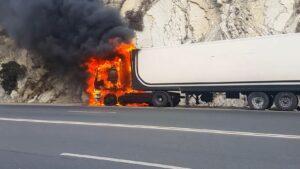


A spoliation letter trucking accident case attorneys send within hours of taking the case ranks as one of the most important documents in your entire claim. Furthermore, it’s also one most accident victims have never heard of. The letter is short, formal, and aggressive — and when done right, it forces a trucking company to preserve evidence that would otherwise disappear within weeks.
Here’s what a spoliation letter does, what it should demand, and why the timing of this single document can make or break a Charlotte trucking accident case.
What “Spoliation” Actually Means
Spoliation is a legal term for the destruction, alteration, or concealment of evidence. In civil litigation, courts take spoliation seriously — particularly when the destroying party knew the evidence was relevant to a pending or anticipated lawsuit.
However, spoliation only triggers consequences when the destroying party had a duty to preserve. That duty kicks in when the party knows (or should know) that the evidence is relevant to litigation. Importantly, the spoliation letter is the formal document that establishes that knowledge.

Speak with a Charlotte car accident lawyer and get a free consultation today.
Call (980) 246-2656What a Spoliation Letter in a Trucking Accident Case Demands
A trucking accident spoliation letter is more than a generic preservation request. Specifically, it identifies the exact categories of evidence the carrier must preserve and explains why each is relevant. A well-drafted letter typically demands preservation of:
Electronic Logging Device (ELD) Records
Every minute of driving time, location, speed, and engine activity captured by the ELD for the relevant period before the crash. Additionally, the letter demands preservation of raw data — not just summary reports the carrier might generate.
Engine Control Module (ECM) Data
The “black box” data showing speed, brake application, throttle position, and steering input in the seconds before impact. As noted, ECM data overwrites itself if the truck continues operating, making this preservation request critical.
Dashcam and In-Cab Video
Forward-facing dashcam footage and any driver-facing in-cab camera recordings from the relevant period. Furthermore, the letter demands the original files — not edited or compressed copies.
Driver Communications
Text messages, dispatch logs, qualcomm communications, and any other contact between the driver and the carrier in the hours and days surrounding the crash. Notably, this includes communications that may have pressured the driver to skip rest breaks or push past hours-of-service limits.
Driver Records
The driver’s qualification file, training records, prior crash history, drug and alcohol test results, medical certification, and any disciplinary records.
Vehicle Maintenance Records
Pre-trip inspection reports, post-trip inspection reports, periodic maintenance logs, repair records, and any documentation of mechanical issues with the truck or trailer.
The Truck and Trailer Themselves
The physical vehicle in its post-crash condition, prior to repair or return to service. Specifically, the letter demands the right to inspect mechanical components — brakes, tires, steering, lighting — before any modifications.
Cargo and Load Documentation
Bills of lading, weight tickets, securement records, and any documentation showing how the loader distributed and tied down the cargo.
Why Spoliation Letter Trucking Accident Timing Matters So Much
Several types of trucking evidence have surprisingly short retention windows. As a result, every day of delay between the crash and the spoliation letter increases the risk that evidence simply ceases to exist.
Critical retention windows in trucking cases:
- ELD data: federal regulations require 6 months of retention — but practical retention is often shorter
- ECM data: overwrites continuously as the truck operates
- Dashcam footage: typically 30 days or less unless flagged
- Driver communications: text messages and dispatch logs auto-delete on many systems
- Vehicle condition: trucks return to service within days of crashes
By the time most accident victims have hired a lawyer — often weeks after the crash — significant portions of this evidence may already be gone. Furthermore, the carrier has every incentive to “lose” inconvenient records before facing legal pressure to preserve them.

What Happens When a Carrier Ignores a Spoliation Letter
The legal teeth of a spoliation letter come from the consequences of ignoring it. When a defendant destroys evidence after receiving formal notice, courts can issue sanctions that range from inconvenient to devastating for the defense.
Possible sanctions include:
- Monetary penalties paid to the injured plaintiff
- Adverse evidentiary inferences (jurors are told to assume the destroyed evidence was harmful to the destroyer)
- Striking of certain defenses
- In extreme cases, default judgment for the plaintiff
The adverse inference is particularly powerful in trucking cases. Specifically, when the court instructs a jury to assume that destroyed ELD data would have shown the trucker was over hours, that single instruction can transform a contested case into a near-certain plaintiff verdict.
Why Carriers Comply (Most of the Time)
Major trucking carriers know the legal stakes of ignoring a properly served spoliation letter. As a result, most large carriers comply with preservation requests when properly noticed — they have too much to lose at trial otherwise.
However, smaller carriers, owner-operators, and out-of-state defendants are less consistent. Furthermore, even compliant carriers sometimes “comply” in name only — preserving low-value records while letting more damaging records slip through the cracks. As a result, follow-up subpoenas, depositions of records custodians, and forensic data recovery often become part of the case.
What This Means for Your Charlotte Trucking Accident Case
The spoliation letter is the single most time-sensitive task after a Charlotte 18-wheeler crash. Furthermore, the longer it takes to get one drafted and served, the less it can protect.
This is one of the strongest practical reasons to hire a Charlotte trucking accident lawyer immediately rather than waiting weeks. A standard personal injury attorney without trucking-specific experience may not even know which evidence categories to demand. Furthermore, a generic preservation request that misses key items leaves gaps the carrier will exploit.
For more on the evidence ecosystem in trucking cases, see our FAQ on how liability is determined in semi-truck accidents.
Talk to a Charlotte Trucking Accident Lawyer Today
Shane Smith Law sends spoliation letters within hours of being retained on a serious trucking case. We know what to demand, how to phrase the demands, and how to follow up if the carrier ignores them.
The consultation is free. We work on contingency — no fee unless we win.
Call (980) 246-2656 today. Or learn more on our Charlotte trucking accident lawyer page.