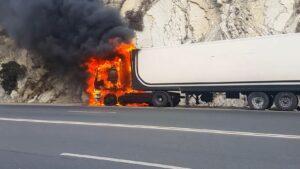


A trucking company rapid response team can be on a Charlotte crash scene before the injured driver has left the emergency room. That fact surprises most accident victims — and it should concern them. These teams aren’t there to help. Instead, they exist to protect the trucking company’s bottom line, often at the direct expense of the people the truck just hit.
Here’s how rapid response teams operate, what they’re collecting at the scene, and why their presence makes hiring a Charlotte trucking accident lawyer immediately so important.
What a Trucking Company Rapid Response Team Actually Is
Major trucking carriers and their insurers maintain pre-arranged response protocols for serious crashes. Specifically, the moment a driver reports a significant incident, a coordinated team mobilizes within hours. The team is purpose-built to do one thing: minimize the carrier’s eventual payout.
A typical rapid response team includes:
- An accident reconstructionist (often a former law enforcement officer)
- A defense attorney representing the carrier
- An adjuster from the commercial insurance carrier
- One or more investigators tasked with witness contact
- Photographers documenting the scene from the carrier’s angle
- Sometimes a public relations specialist for fatal or high-profile crashes
The team works under a single mandate: build the carrier’s defense before the injured party can build their case. As a result, every action they take is calibrated to that goal.

Speak with a Charlotte car accident lawyer and get a free consultation today.
Call (980) 246-2656What They’re Doing at the Scene
Rapid response work falls into three categories: evidence collection, witness contact, and damage control. Each one carries direct risk for the injured party’s eventual claim.
Evidence Collection Favorable to the Carrier
The reconstructionist and photographers document the scene from angles that support the carrier’s narrative. For example, if the trucker claims the other driver swerved, the team will photograph any tire marks, debris patterns, or roadway features that support that theory. Importantly, evidence that contradicts the carrier’s narrative may not get the same attention.
Furthermore, the team often arranges for the truck to be towed to a carrier-friendly facility. Once there, the truck can be inspected, repaired, or sometimes returned to service before opposing experts have a chance to examine it.
Witness Statements Steered Toward the Carrier
Investigators interview witnesses while memories are fresh — but the framing matters. A skilled investigator can ask questions in ways that elicit statements helpful to the carrier. As a result, a witness who would have given a balanced account in a neutral setting may give a carrier-favorable statement when interviewed by the carrier’s investigator.
Statements From the Injured Driver
If the injured party is conscious, the adjuster may attempt to make contact. The goal is to get a statement, ideally recorded, that contains information the defense can later use. Common tactics:
- Calling the hospital room directly
- Reaching out through family members
- Offering a quick “courtesy” payment in exchange for a release
- Asking apparently innocent questions that probe for contributory negligence factors
Even seemingly harmless statements can later be twisted. Phrases like “I didn’t see him coming” or “I’m fine, just shaken up” can become evidence the defense uses against you months later.
Why North Carolina Cases Are Especially Vulnerable
NC’s pure contributory negligence rule makes Charlotte trucking cases particularly attractive for aggressive rapid response work. Specifically, the carrier doesn’t need to prove you caused the crash. They only need to prove you contributed to it in some small way — even 1% — to defeat your entire claim.
That legal reality changes how rapid response teams operate. Indeed, their entire focus shifts to finding any contributory factor on the injured driver’s part. Common factors they look for:
- Speed in the moments before impact (even 3 mph over the limit)
- Brief inattention or distraction
- Vehicle equipment issues (expired tag, burned-out bulb, worn tires)
- Lane position or signaling
- Use of phone, radio, or other devices
- Recent unrelated traffic violations
None of these need to have caused the crash. Under NC law, they only need to have contributed to it — and the burden of proving they didn’t falls on you.

How a Charlotte Trucking Accident Lawyer Levels the Field
Hiring an attorney immediately doesn’t just protect your case — it actively offsets the rapid response team’s work. Specifically, your attorney can:
Send a Spoliation Letter Within Hours
The spoliation letter forces the carrier to preserve all crash-related evidence. Furthermore, when the carrier destroys evidence after receiving such a letter, courts can issue sanctions that significantly favor your case at trial.
Conduct an Independent Investigation
Your attorney’s investigator examines the scene, the truck, and the surrounding evidence from your perspective — not the carrier’s. This includes preserving evidence the carrier’s team might overlook or actively avoid documenting.
Take Control of Witness Contact
Once you’ve retained counsel, witness interviews go through your attorney. As a result, the carrier’s investigators lose their head start on shaping witness recollections.
Block All Insurer Contact
Trucking insurers stop calling once you have a lawyer. Furthermore, your attorney handles all communications, including settlement discussions — which means no more hospital-room calls or recorded-statement traps.
What This Means for Your Case
The rapid response team isn’t a hypothetical threat. It’s a standard operating procedure for major trucking carriers in the country. By the time you’re physically able to think about hiring a lawyer, the carrier’s team has already been working against you for hours or days.
You can’t undo their head start. However, you can stop the bleeding by hiring counsel as soon as humanly possible after the crash.
For more on liability in trucking cases, see our FAQ on filing claims against trucking companies.
Talk to a Charlotte Trucking Accident Lawyer Today
Shane Smith Law has spent more than 15 years matching the trucking industry’s playbook on behalf of injured Charlotte clients. We know how rapid response teams work, what they collect, and how to neutralize their early advantages.
The consultation is free. We work on contingency — no fee unless we win.
Call (980) 246-2656 right now. Or learn more on our Charlotte trucking accident lawyer page.